


MamaZen: Mindful Parenting App
3.871.00 Reviews
App Specs
- Version
- 1.44.11
- Updated On
- License
- Free
- Downloads
- 10,000+
- Developer
- Motherhood, Parenting & Family Wellness Institute
- Categories
- Parenting
- Platform
- Android
Screenshots



 Analysis by AppCompare
I approached MamaZen: Mindful Parenting App as a practical parenting companion rather than a replacement for professional advice. Its focus is positive parenting and the emotional side of raising children, which makes it different from the many apps that mainly track feeding, sleep, milestones, or appointments. In my experience, that distinction matters: the difficult moment is often not a missing record, but a tired parent trying to respond calmly when a child is upset.
The app comes from Motherhood, Parenting & Family Wellness Institute and is listed as a free parenting app for everyone. It has a 3.8 average from around 236 ratings, with roughly 71 written reviews, and has passed 10K+ installs. Those figures suggest a modest but established user base rather than a huge mainstream platform. I would see that as a reason to approach it for its specific purpose, not as proof that it will suit every family.
A calm-parenting tool built for real pressure
The strongest idea behind MamaZen is that parenting advice is most useful when it can be applied during an ordinary stressful day. A parent may understand positive parenting in theory and still lose patience after repeated interruptions, a messy meal, or a child refusing to leave the house. An app centered on mindful parenting can help create a pause between the trigger and the reaction.
That is where I think this app makes the most sense. I would open it when I had enough time to think about a recurring pattern, then use what I learned later when the same situation appeared at home. The value is not simply reading a reassuring message. It is identifying what usually sets off my reaction, noticing how my child responds, and choosing a more deliberate answer next time.
A realistic example would be the end of the school day. A child comes home irritable, drops a bag near the door, and refuses to talk. My first instinct might be to ask several questions or demand cooperation immediately. A mindful-parenting approach encourages me to slow down, recognize that both of us may be overloaded, and prioritize connection before correction. MamaZen is relevant in that gap between knowing this approach and remembering to use it.
The most useful way to treat MamaZen is as a repeatable reflection habit, not an emergency button. If I only open it once a crisis has already reached its peak, I may not have the attention needed to absorb anything. Short, regular use is more realistic: review an idea during a quiet part of the day, then deliberately test it during one familiar family situation.
What the app adds beyond ordinary parenting articles
General parenting websites are good for finding an answer to a narrow question, such as how to handle bedtime resistance or sibling conflict. Their weakness is that they can leave me jumping between disconnected advice pages. MamaZen’s appeal is the possibility of keeping the attention on the parent’s mindset and emotional response, rather than treating every incident as a separate behavior problem.
Worth Reading Before You Choose

EA SPORTS FC Mobile 26 Is a Bigger Football Game, but It Takes Time

Flipboard Shows What News Apps Must Do Beyond the Feed

Switching to Android Auto Means Rethinking Your Driving Routine

Google Calendar Makes a Crowded Week Easier to Manage

Ludo King Makes the Most of the Minutes Between Plans

Baby Panda World Brings Quick Play to Modern Phones, but Its Game Library Feels Busy
That makes it particularly suitable for someone who already knows the basic discipline techniques but struggles to use them consistently. It is also a better fit for parents who want a gentler framework without turning every interaction into a negotiation. The positive-parenting angle does not mean allowing every behavior. It means trying to set limits without adding unnecessary anger, shame, or escalation.
Still, I would not confuse mindful parenting with a complete family-management system. Someone looking primarily for growth charts, medication reminders, feeding logs, sleep graphs, or shared calendars would probably be better served by a dedicated tracking app. MamaZen addresses the parent-child relationship and the parent’s reactions; it is not designed around household administration.
Speed expectations during normal use
For an app like this, perceived speed is less about demanding graphics and more about whether I can get to useful guidance without friction. Parenting moments rarely arrive at a convenient time. If I have one hand occupied, a child asking questions, and only a minute to spare, a complicated path through menus would undermine the whole purpose.
I would therefore judge the experience by how quickly I can resume a familiar routine and whether the material feels easy to consume in small portions. A calm, low-pressure design is more valuable here than a crowded dashboard. The app’s purpose favors focused sessions rather than constant interaction, so I would not expect it to behave like a social network or a media-heavy entertainment product.
My practical advice is to explore it when the household is quiet instead of waiting for a difficult incident. That lets me understand where the relevant material is and decide which ideas fit my family. Once that preparation is done, the app becomes easier to use when I am tired because I am returning to a known resource rather than searching from scratch.
There is also a subtle speed trade-off. Parenting guidance that is too brief can feel instantly accessible but fail to change behavior. Material that asks me to reflect takes longer, yet may be more useful over time. I would accept a little extra reading or thinking if it helps me recognize my own patterns instead of merely giving me another instruction to remember.
How it holds up during heavy-use moments
The hardest test is not a peaceful evening; it is repeated use during a demanding week. A parent might return to the app after several difficult bedtimes, a tense morning routine, or a disagreement with a partner about discipline. In those circumstances, the app needs to support reflection without making the parent feel judged.
I would use it in two stages. First, I would choose one recurring problem rather than trying to repair every family dynamic at once. Second, I would connect the guidance to a specific action, such as lowering my voice, offering two acceptable choices, or waiting before giving another instruction. This turns an abstract parenting principle into something observable.
One non-obvious benefit of that approach is that it prevents overuse from becoming another source of pressure. I do not need to consume everything or become perfectly calm. The better question is whether one idea helps me handle one repeated moment differently. If it does, the app has earned another place in my routine.
There is a limitation here: an app cannot remove the conditions causing exhaustion. If sleep deprivation, work stress, conflict at home, or a child’s serious behavioral needs are the main issue, mindful prompts may feel too small. I would use MamaZen alongside practical support, conversations with trusted people, and professional help when appropriate, rather than expecting it to solve a complex situation by itself.
Reliability, continuity, and returning to a routine
Reliability for a parenting app includes more than opening successfully. I also want the experience to feel dependable enough that I can build a habit around it. A resource that feels inconsistent, confusing, or emotionally tone-deaf will quickly be abandoned, especially by parents who already have limited spare time.
MamaZen’s clear identity helps in that respect. It is not trying to be a universal family organizer. The developer, Motherhood, Parenting & Family Wellness Institute, presents it as a focused parenting and family-wellness product, so I know what kind of support I am opening it for. That narrow purpose is useful when I want emotional guidance rather than another stream of household data.
I would also keep expectations realistic about continuity. The app can support a personal routine, but the real consistency has to come from me. A helpful workflow is to choose a regular moment, such as after the children are asleep or before the morning begins, and connect one reflection to the next day’s behavior. Writing down a brief observation outside the app can make the lessons easier to remember, especially if I tend to forget advice once the next crisis arrives.
Another practical point is to involve a co-parent when possible. If only one adult changes approach, a child may receive mixed signals. MamaZen can help me think through my own response, but it cannot automatically align everyone in the household. Sharing one simple principle with a partner may be more effective than privately collecting many ideas.
Device limits, access, and the cost question
The app supports devices running Android 6.0 or later, which covers older Android hardware as well as newer phones. That is helpful for families who do not replace devices frequently. At the same time, an older phone may make any app feel less comfortable if storage is tight, the operating system is heavily burdened, or the battery is already weak. I would keep the device updated as far as it safely allows and avoid judging the app solely by an aging handset.
MamaZen is free to download, but it includes in-app purchases priced from $9.99 to $49.99 per item. That is an important distinction for anyone expecting every part of the experience to be available without payment. I would begin with the free portion and decide whether the guidance is genuinely useful before considering a purchase. The higher end of that range makes it especially important to understand the value of any paid material rather than subscribing or buying impulsively during a stressful week.
The content rating is Everyone, which makes the app broadly approachable from an age-classification perspective. That does not mean every parenting situation is suitable for self-guided app advice. Parents dealing with safety concerns, severe distress, developmental questions, or persistent family conflict should treat this as supplementary support and seek qualified help when needed.
Resource demands are also worth considering in practical terms. A parenting tool that I use briefly should not become a major drain on attention, storage, or battery. I would avoid keeping it open unnecessarily, especially on an older phone, and I would use a stable connection when accessing material that depends on loading. Those are ordinary precautions, but they matter when the app is intended to fit into small gaps in a busy day.
Where it beats familiar alternatives, and where it does not
Compared with a parenting book, MamaZen is easier to keep nearby and more convenient when I want a focused reminder rather than a long chapter. A book can offer deeper context and a more coherent overall argument, though, so I would prefer that format for serious study or for discussing an approach with a partner.
Compared with short social-media parenting videos, the app should feel more purposeful. Social feeds are quick and emotionally engaging, but they can encourage comparison and present oversimplified solutions. MamaZen is a better choice when I want to reflect on my own behavior instead of watching a succession of dramatic family scenarios.
Compared with a child-tracking app, its strength is almost the opposite. Tracking tools help me measure routines and notice patterns in sleep, meals, or appointments. MamaZen is more concerned with what happens inside the interaction. If my main problem is forgetting an appointment, I need a calendar. If my main problem is reacting sharply to a child who is already overwhelmed, this app is more relevant.
Compared with therapy or a parenting class, it is more private, flexible, and immediately available, but much less personal. It cannot ask follow-up questions about my family, notice contradictions in my account, or adapt responsibly to serious risk. That is not a flaw unique to this app; it is the unavoidable boundary of self-guided digital support.
Who should try it and who should skip it
I would recommend giving MamaZen a fair trial if I wanted to become less reactive, preferred positive-parenting ideas, and could spare a few quiet minutes for reflection. It is especially promising for parents who repeatedly think, “I knew I should have handled that differently,” and want a structured way to turn that realization into a habit.
I would be more cautious if I wanted a highly measurable system. Parents who expect detailed charts, extensive scheduling, or a complete record of family life may find the focus too narrow. I would also skip it as a primary solution if I needed urgent mental-health support, crisis intervention, medical guidance, or individualized assessment of a child.
Families should also think about payment before becoming invested. The free entry point lowers the barrier to trying it, but the in-app purchase range means the full experience may require a meaningful decision. I would not buy simply because I was having a bad parenting day. I would first test whether I return to the app voluntarily and whether its ideas produce a noticeable change in one recurring situation.
My performance verdict after weighing everyday use
MamaZen is a focused parenting app with a sensible place in a modern family routine. Its performance value is not flashy speed or a large collection of tracking tools. It lies in how easily a parent can return to the central task: noticing a reaction, creating a pause, and responding to a child with more intention.
The experience is likely to be most satisfying when I use it proactively, in short sessions, and around one concrete family challenge at a time. It becomes less convincing when I expect instant help in the middle of a meltdown, a complete answer to a complicated household problem, or the depth of a professional relationship.
The current version is 1.44.11, and the app has been available since September 4, 2020, giving it a longer presence than a brand-new experiment. I would still base my decision on personal usefulness rather than longevity. The 3.8 average indicates a mixed but generally workable reception, so I would approach it with reasonable expectations instead of assuming it will transform every parenting difficulty.
My final view is positive but measured. MamaZen is worth trying for parents who want a calm, practical way to work on their own side of the parent-child relationship. Start with the free experience, use it during quiet moments, apply one idea to one real situation, and judge the result over time. If what I need is emotional awareness and more deliberate responses, it can become a helpful companion. If I need tracking, urgent support, or deeply personalized guidance, another tool or a qualified professional would be the better choice.
Pros
- Short guided exercises fit easily into busy parenting routines.
- Covers stress
- anger
- sleep
- and emotional regulation for parents.
- Mindfulness practices are beginner-friendly and easy to follow.
- The supportive tone feels practical rather than judgmental.
- Progress can be made privately without attending live sessions.
Cons
- Most useful content may require a paid subscription.
- Some exercises can feel repetitive after regular use.
- It is not a replacement for professional mental health support.
- Benefits depend on practicing consistently over time.
- Parents seeking child-focused activities may find the scope limited.
FAQs for MamaZen: Mindful Parenting App
What is MamaZen: Mindful Parenting App and who is it for?
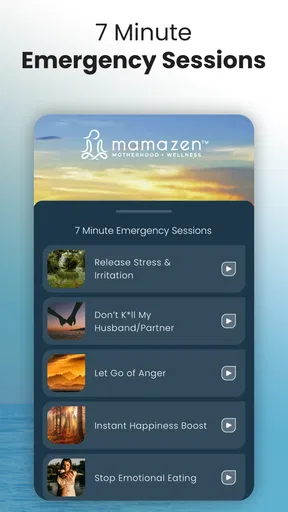
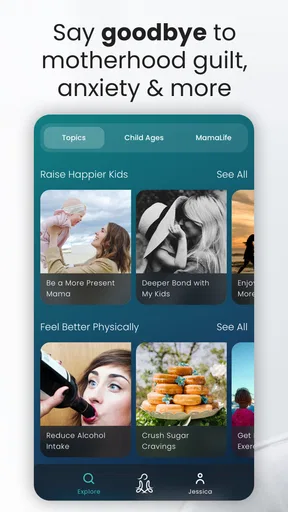
MamaZen is a mindfulness and emotional-wellness app designed to support parents through the stressful, overwhelming, and sometimes exhausting moments of family life. It typically focuses on guided meditations, relaxation exercises, sleep support, and practical tools for managing emotions. The app may be especially useful for mothers and caregivers who want short, accessible sessions that fit around childcare, work, and household responsibilities.
What features does MamaZen offer to help with parenting stress?
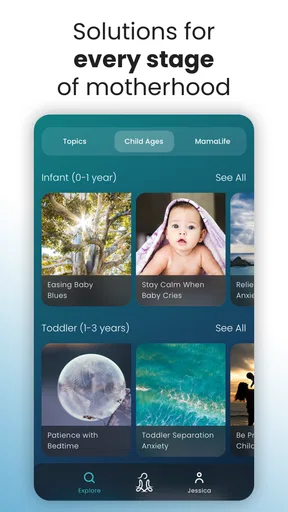
MamaZen generally combines guided mindfulness sessions with content aimed at common parenting challenges, such as anger, guilt, anxiety, overwhelm, patience, and difficulty relaxing. Depending on the current version, users may find meditation programs, breathing exercises, affirmations, sleep-focused audio, and quick practices for stressful situations. The structured approach makes it easier to choose support based on your mood or immediate needs.
Is MamaZen free to download, and does it require a subscription?
MamaZen can usually be downloaded at no initial cost, but access to its complete library may depend on a subscription or in-app purchase. Some content may be available for free, while premium programs, extended courses, or additional audio sessions could require payment. Before confirming a trial or subscription, review the price, billing frequency, renewal terms, and cancellation instructions shown in the App Store or Google Play.
Can I use MamaZen if I have never practiced meditation before?
Yes, MamaZen is intended to be approachable for beginners and does not require previous meditation experience. Most guided sessions explain what to do and encourage users to focus on breathing, body sensations, or present thoughts without judgment. Parents can begin with shorter exercises and gradually build a routine. It is also normal for concentration to fluctuate, especially when practicing in a busy home environment.
Can MamaZen replace professional therapy or medical treatment?
No. MamaZen should be viewed as a self-care and mindfulness resource, not as a replacement for a doctor, psychologist, therapist, or other qualified healthcare professional. Meditation may support relaxation and emotional awareness, but serious anxiety, depression, persistent anger, trauma, or thoughts of self-harm require professional attention. If your symptoms feel severe or interfere with daily life, seek appropriate medical or mental-health support promptly.


